EMDR Therapy NYC & Nearby Areas | Trauma Reprocessing Treatment Therapist
When past experiences live in your body, they can show up as looping thoughts, sudden tension, or reactions that feel bigger than the moment. For many women and sensitive high-achievers, this creates a constant sense of alertness, exhaustion, or emotional overwhelm. If you’re tired of holding everything together on your own, there’s nothing wrong with you.
You’ve simply outgrown an old pattern that once helped you to function that no longer serves you. Through Somatic & Movement Psychotherapy and EMDR, I help you gently reprocess what’s underneath so you can feel more grounded,intentional and balanced in your everyday life.
What is EMDR therapy?
EMDR (Eye Movement Desensitization and Reprocessing) is a trauma-focused therapy that helps your brain and body reprocess past experiences so you can finally feel safe, grounded, and more in control of your reactions. Instead of talking through trauma over and over, EMDR uses an 8 phase process and bilateral stimulation to help your nervous system resolve stuck emotions and stored pain at the root. I recognize trauma to include any event or interaction that you perceive to have been physically, emotionally or psychologically threatening and remains disturbing, distressing and/or upsetting to you.
EMDR works under the belief that just as the physical body is inherently designed to heal, so is the brain. Therefore, EMDR helps to activate the inherent system to process information that got stored or stuck to facilitate healing. EMDR will not erase the memory, but rather help you to remember the story without all the emotional charge that was distressing before the treatment.
EMDR is widely researched and evidenced based modality that is the recommended treatment of choice by several international mental health organizations.
Most common symptoms EMDR helps with
Many clients turn to EMDR therapy when they notice emotional and behavioral patterns that have been too hard to shift on their own. Some of the most common signs include:
- Intrusive memories or flashbacks: moments when the past suddenly feels present in your body or mind.
- Anxiety that feels “bigger than the moment”: emotional reactions that don’t match what’s happening around you.
- Relationship triggers: shutting down, spiraling, or feeling unsafe during conflict or closeness.
- Emotional numbness or disconnection: feeling “far away” from yourself or unable to access your emotions.
- Hypervigilance and chronic overwhelm: staying on high alert even when you want to relax.
- Struggles with boundaries: feeling guilty, responsible for others, or afraid to take up space.
- Deep exhaustion: the kind that comes from holding long-term stress or trauma in your nervous system.
- Negative/Limiting Self-Beliefs: when there is no amount of external success, validation or affirmation that truly shifts how you see and what you believe about yourself
If you’ve tried to move forward but your body still reacts like the past is happening right now, EMDR can help you find relief and reclaim a sense of safety within yourself.
How do I know If I need EMDR?
You might benefit from EMDR therapy if:
- You feel stuck in patterns you can’t “logic” your way out of
- Your reactions feel disproportionate to what’s happening
- You’ve lived through trauma (big or small) that still affects you
- Your nervous system feels constantly on edge
- You’re tired of feeling like you’re “too much” and/or “not enough”
- You want deep change, not surface-level coping skills
If any of these resonate, EMDR can support you in finding regulation, clarity, and emotional freedom.
How I support you with EMDR therapy NYC & nearby areas
My approach to EMDR is intentional, grounding, and centered on your nervous system’s capacity. Instead of forcing your system to “push through,” we work slowly and collaboratively so your body feels safe enough to release what it’s been holding.
I integrate EMDR with somatic therapy, movement-based regulation, breathwork, and attachment-focused support. These tools help you understand your body’s signals, reduce overwhelm, and process trauma in a way that feels steady and manageable. The goal is not only to reduce symptoms, it's to help you rebuild inner trust, rewrite negative self-beliefs, strengthen emotional resilience, and create a foundation of stability you can return to in your everyday life.
What topics can we talk about in EMDR therapy?
EMDR therapy can help you work through a wide range of experiences, including:
- Healing unresolved trauma: processing memories or sensations that continue to shape your reactions, emotions, and relationships.
- Navigating attachment wounds: exploring patterns of avoidance, anxiety, hyper-independence, or overgiving in relationships.
- Managing emotional overwhelm: understanding why small triggers lead to big reactions and learning to regulate your nervous system.
- Setting boundaries without guilt: learning to protect your energy, express your needs, and feel safe taking up space.
- Releasing survival patterns: shifting out of shutdown, people-pleasing, perfectionism, or constant vigilance.
- Rebuilding self-trust. connecting to your intuition, practicing choice, and feeling more grounded in your body and decisions.
How it works
Initial consultation
We’ll connect for a free consultation to see if we’re a good fit. Here we’ll briefly talk through what you’re needing, my approach and address any logistical questions.
Getting started
You’ll get access to my secure client portal, where you’ll be able to schedule your first appointment and complete intake paperwork so I can understand your history, context, and needs a little more.
Building our foundation
We’ll begin with at least four consecutive sessions. This gives us time to establish our working relationship, identify your goals, and see the full picture of what it’s like to be you. During this phase, we’ll also explore whether EMDR could be a good fit for your healing process, or if other somatic and movement-based approaches might better support your needs. From there, we can adjust frequency together, and if I think less often isn’t in your best interest, I’ll let you know with a clear clinical recommendation.
EMDR therapy specialist in NYC & nearby areas
I’m Stefanie Raccuglia, a somatic psychotherapist and EMDR practitioner specializing in trauma, attachment wounds, and the emotional patterns that stay stored in the body long after the mind wants to move on. I support women, sensitive high-achievers, and those who’ve learned to hold everything together at the expense of their own well-being.
My work blends EMDR with somatic psychotherapy and movement so you can process trauma gently, rebuild internal safety, and move through the world with more clarity, steadiness, and self-trust.
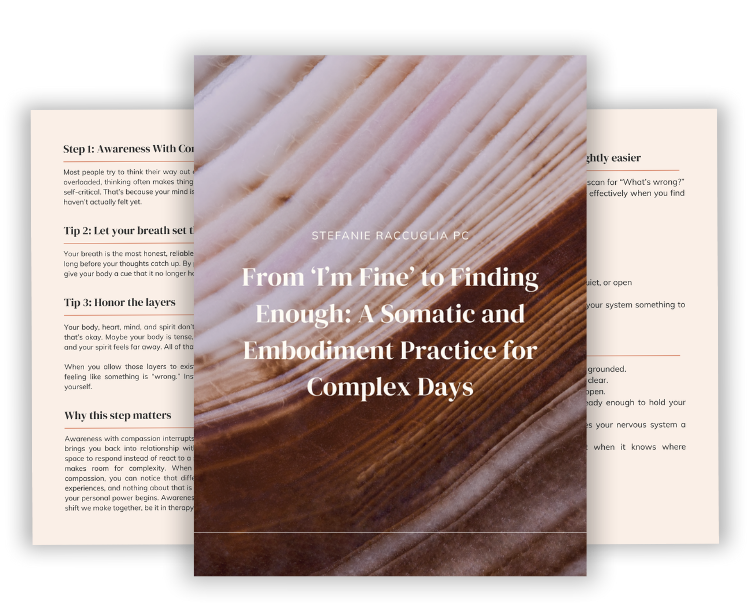
Tips & resources for coping with trauma before starting EMDR
The first phase of EMDR is the preparation phase, which means we’ll spend the time we need to make sure your body, mind and nervous system are ready to begin the reprocessing.
Additionally, we’ll spend time building out a clear treatment plan so you feel clear and in control of where the work is headed. I will walk you through specific regulation tools, skills and practices so you are fully prepared to go into reprocessing.
The preparation phase is the foundation of the work, so we allow this phase to take the time it takes. Together, we’ll also think about what you can do outside of sessions that support your work.
Here are a few gentle practices you can use to support your body and nervous system as you prepare for EMDR therapy:
- Use grounding techniques: feel your feet on the floor, place a hand on your chest, or take slow breaths to help your body settle.
- Limit overstimulation: step back from social media, loud environments, or intense conversations when your system feels overwhelmed.
- Create a simple regulation routine: a short walk, stretching, or gentle movement can help your nervous system release built-up tension.
- Practice moments of noticing : pause throughout the day to bring attention to our body: your breath, posture, and areas of tension.
- Talk to someone you trust: sharing what you’re experiencing with friends or family can reduce isolation and help you feel more supported.
- Explore additional somatic resources: guided grounding audios, nervous system regulation videos, or trauma-informed movement practices.
These tools don’t replace EMDR, but they can help you create steadiness and internal safety as you begin your healing process.

Hi there, I´m Stefanie Raccuglia
Clinically, I'm a Licensed Professional Counselor (CO), Licensed Mental Health Counselor (NY), Registered Dance/Movement Therapist, and EMDRIA Certified EMDR therapist.
Psychotherapy in Colorado and New York - Pricing
Individual Therapy
- 55–60 minute sessions — ongoing weekly or biweekly therapy.
- 85–90 minute sessions — extra time for EMDR or when you want more room to process and integrate.
- Half-day intensives — immersive, extended sessions where you can experience, move, and process at a deeper embodied pace, then circle back to integrate. These offer a reset that weekly therapy alone can’t always reach.
*Rates vary by state. We’ll go over exact rates during your free initial consultation, along with any options for sliding scale (limited spots) and out-of-network reimbursement.
Professional Consultation & Supervision
For therapists, coaches, and providers who want to deepen their clinical work.
- EMDR Consultation — As an EMDRIA Consultant-in-Training, I provide consultation hours that count toward EMDRIA certification. Together we’ll refine your skills, strengthen case conceptualization, and grow your confidence with this modality.
- Embodied Professional Consultation — For providers who want to integrate a somatic lens into their work. We’ll explore interventions, case material, and professional presence from an embodied perspective, helping you expand beyond cognitive approaches and bring the body more fully into the room.
FAQ
How long does EMDR therapy usually take?
EMDR timelines vary from person to person. Some clients begin noticing shifts within a few sessions, while deeper trauma may require a longer process. The goal isn’t speed, it's safety. We move at the pace your nervous system can tolerate so your healing feels grounded and sustainable.
Can EMDR help even if I don’t remember everything about my trauma?
Yes. You do not need full or clear memories for EMDR to work. EMDR focuses on how your body holds the impact of the experience, sensations, beliefs, emotions not the exact details. Many clients find relief even when memories are blurry or incomplete.
Does EMDR make you relive your trauma or feel worse before it gets better?
EMDR is designed to keep you within a safe window of tolerance. You won’t be pushed to relive anything. My approach is highly attuned and somatic, meaning we prioritize stabilization, grounding, and connection before any reprocessing. If your system needs to slow down, we always slow down.
What does an EMDR session with you actually look like?
Sessions are calm, structured, and deeply supportive. We’ll use bilateral stimulation (eye movements, tapping, or gentle cues), somatic awareness, grounding, and relational attunement. You remain in control the entire time, and your body guides the pace. Nothing is rushed, forced, or overwhelming.
Is EMDR effective for anxiety or relationship triggers, or is it only for trauma?
EMDR is highly effective for anxiety, attachment wounds, emotional reactivity, and relationship triggers. Even without a single “big trauma,” EMDR helps your nervous system process the patterns that keep you stuck, worry loops, fear responses, people-pleasing, shutdown, or hypervigilance.
Good Faith Estimate
Beginning January 1, 2022, you have the right to receive a “Good Faith Estimate” explaining how much your medical care will cost.
Under the law, health care providers need to give patients who don’t have insurance or who are not using insurance an estimate of the bill for medical items and services.
You have the right to receive a Good Faith Estimate for the total expected cost of any non-emergency items or services. This includes related costs like medical tests, prescription drugs, equipment, and hospital fees.
Make sure your health care provider gives you a Good Faith Estimate in writing at least 1 business day before your medical service or item. You can also ask your health care provider, and any other provider you choose, for a Good Faith Estimate before you schedule an item or service.
If you receive a bill that is at least $400 more than your Good Faith Estimate, you can dispute the bill.
Make sure to save a copy or picture of your Good Faith Estimate.
Colorado- For questions or more information about your right to a Good Faith Estimate, visit www.cms.gov/nosurprises or call the Colorado Division of Insurance at 303-894-7490 or 1-800-930-3745
New York- For questions or more information about your right to a Good Faith Estimate, visit www.cms.gov/nosurprises or call the New York State Department of Financial Services at 1-800-342-3736 or 212-480-6400.